Facebook
 X
X
 Pinterest
 Copy Link
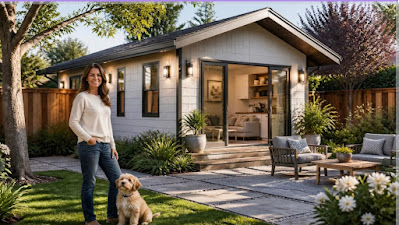
Don’t Let Grandma Live in the Street: California has opened doors to SUPERSEED HOA rules & fast track Granny Pods or Additional Dwelling Unit (ADU)
Can’t afford Assisted Living? Don’t Let Grandma Live in the Street!
Looking to add space to your home: This is what you need to know!
California recent changes to ADU (Accessory Dwelling Unit) laws are a game changer — they unlock fast, cost-effective ways to add living space, increase rental income, and boost resale value, while also solving a very real family problem: caring for aging parents without breaking the bank. With housing rules loosened across the state and demand for multigenerational solutions rising, adding a permitted guest house or granny pod can turn wasted backyard square footage into a practical, income-producing, and deeply personal asset—giving you flexibility, financial upside, and a place for Grandma (or Grandpa) that keeps family close and safe.- California rewrote the ADU rulebook in recent years — it’s easier and faster than ever to add a legal secondary unit on your property.
– Value drivers: home values often track square footage and bedrooms. A legal ADU or guest house can increase rent potential, resale value, and flexibility.
– Family drivers: assisted living is expensive and often limited by insurance. Multigenerational living (aka “granny pod” living) solves care, companionship, and cost problems — literally bringing Grandma into your backyard.
What changed in California (plain-English overview)
– State law has removed many local barriers: cities must now allow at least one ADU on most single-family lots and streamline approval for both ADUs and junior ADUs (JADUs).
– Reduced fees and faster permits: in many cases fees are lower if the ADU is under a certain size, and ministerial approval (no discretionary hearing) is often required.
– Relaxed setback & lot coverage rules: state law allows local governments to be more flexible with setbacks, height, and lot coverage for ADUs — especially smaller ones — though local rules still apply.
– No owner-occupancy requirement in many cases: state changes removed or limited owner-occupancy requirements, making it easier to rent both the main house and the ADU.
– Utility connections & impact fees: newer ADU laws generally limit or waive impact and utility connection fees for small ADUs/JADUs, but larger units may still face charges.
Note: local municipalities still set specific rules. Always check local zoning and building departments for caps, size limits, parking requirements, and utility hookup rules.
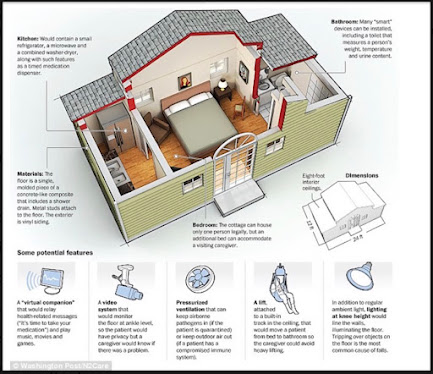
Granny Pods — what are they?
– Small, self-contained living units designed for seniors: sleep, living, bathroom, sometimes a small kitchenette, usually configured for accessibility.
– Built with safety features: grab bars, single-level entry, wider doors, slip-resistant floors, and often designed to accommodate medical equipment.
– Hookups: typically connect to the main house’s electric, water, and sewer. Some models are portable and can be moved.
– Permitting: if treated like a mobile home or RV, some pods can be placed without a full ADU permit; if permanent, they usually need ADU permitting and to meet local building codes. Rules depend on model and local jurisdiction.
“Where does Grandma go?” — options and planning tips
– Option A: Full ADU (permitted guest house). Best for long-term, permitted living space with resale value.
– Option B: Granny Pod (pre-fab or modular). Fast, accessible, often cheaper; great for immediate needs. And HONESTLY you will be surprised by the lower cost and durability!
– Option C: Convert garage/ Back Bedroom or Patio/JADU. Cost-effective and keeps family close and secure. ALSO can take advantage of current utilities.
– Option D: Assisted living (if budget allows and medical needs require it).
Planning checklist before you commit:
- Check local zoning/building department: ADU size limits, setbacks, parking requirements, utility connections, and fees.
- Confirm permitting requirements for the specific granny pod or tiny home model.
- Budget: construction/purchase + utility hookup + accessibility mods + ongoing operating costs.
- Accessibility & healthcare needs assessment: ramps, bathroom modifications, emergency response systems.
- Household expectations: privacy rules, caregiving duties, financial arrangement.
- Resale considerations: permitted ADUs add value more easily than unpermitted structures.
Coachella Valley note (local color):
– In markets like the Coachella Valley, demand for guest houses and ADUs has been high — buyers are thinking ahead about caregiving and rental income.
– Many Boomers and their adult children are deliberately buying properties with permitted guest houses for future multigenerational plans or caregiver space.
Is this new or an old idea?
– Multigenerational living is old as time — families have long shared space for economics and care. What’s new is the legal and design infrastructure (ADU legalization + modern granny pod designs) making it easier and more attractive to do it now.
Action steps — If you’re a homeowner or investor:
– Want to add value and flexibility? Consider a permitted ADU.
– Need immediate senior housing? Research granny pod models and local permitting.
– Talk to a local ADU-friendly contractor and your city building department — permit rules differ by city.
– Consult a real estate agent about how permitted ADUs affect property value in your neighborhood.
Resources:
– Start with your local city planning/building department for exact ADU and granny pod rules.
– Consumer-facing info: look for reviews and safety guidance on consumer protection sites and senior-living resources.
-City Planning Departments
-Check in with any HOA Rules (they may be outdated as the State Legislation SUPERSEEDS)